A first tranche of funding from the NoVo Foundation (renamed the Regional Futures Fund) at the end of 2025 has enabled us to begin to expand our core team. A second tranche is promised at the end of this year which will further enable us to strengthen our governance and organisational capacity, and significantly increase our ability to engage across the Bioregion. It will also allow us to deepen relationships and contribute more fully to the growing global community of practice in bioregioning.
Four new positions joined our team this spring: data analyst, ecologist, journalist/storyteller, and bioregional finance lead! Read more to get to know some of our new members.
Daisy Ford-Downes, Impact Investment Consultant and Bioregional Finance Lead
A bit about me
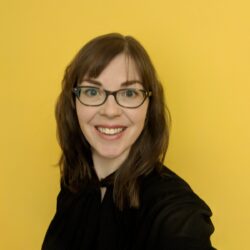
Daisy Ford-Downes, impact investment consultant. I’ve spent my career to date exploring finance and funding, particularly at the early stage, and most recently led the investment team at Firstport, Scotland’s agency for startup social enterprise. I now work independently designing finance that gets more good ideas into the world. With Bioregioning Tayside I’m the lead on Bioregional Finance, so I’m working on the plumbing that lets regenerative money flow into and around the bioregion.
Why am I drawn to bioregioning?
I love that bioregioning starts by asking about the systems that define a place, not the administrative boundaries, and then considers what a healthy and thriving future for that place looks like. It starts with hope, and builds out the what and the how from there.
What is on my docket in this role?
Short term: running pilots and projects that let us explore different elements of what Bioregional Finance looks like – the governance and community, the financial instruments, the information, the different projects that contribute to a healthy bioregion. Long term this should grow into a financial ecosystem that echoes and supports the natural ecosystems of the Tay Bioregion.
Nonie Coulthard, Ecologist
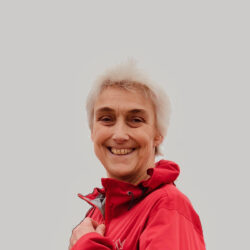
Who am I?
Nonie Coulthard, and I grew up in North Yorkshire and Scotland with lots of wild camping and being outdoors. I studied zoology, ecology (Dundee, Aberdeen), then fulfilled my dreams of going to Africa and working in conservation. I spent several years living in Sénégal, then in The Camargue, studying the behaviour of bee-eaters. I worked for RSPB and BirdLife International (as first Head of Africa Programme) and then for a few decades as a consultant on international conservation and development programmes across Africa (and a bit in other places) – as well as at home in Scotland. Apart from a sojourn living on Vancouver Island, I’ve lived with family in the Angus Glens since the late ’90s, enjoying the hills and the water and outdoor adventures – kayaking, biking, hillwalking, here and other favourite places in Scotland, especially the Outer Hebrides. We are so incredibly fortunate in Scotland to have such amazing outdoor access (thanks to the huge efforts of many people in Scotland 20-odd years ago and the Land Reform Act). I still work internationally – now mostly pro bono work in Sierra Leone and other parts of West Africa. And I’m now involved again in nature restoration and people projects back home – very excited to join the Bioregioning Tayside efforts.
Why am I drawn to bioregioning?
I love the combination of good systems analysis and using the evidence base, coupled with working locally and with a real sense of place and listening to local voices and cultural and ecological histories. I’m passionate about local people being the solution to conservation and development issues, wherever you look in the world, and the necessity of building local relationships to lead and achieve better and more equitable outcomes for biodiversity, people and planet.
What is on my docket in this role?
In the short-term, I’m working with the RECRI sub-project (River Ericht Catchment Restoration Initiative), following up with land management partners on the recently completed Phase 2 (NRF/ PKC grant-funded). We’re discussing the river restoration and biodiversity enhancement recommendations and which options (from the expert reports) stakeholders are interested in implementing on their landholding, to help improve river and riparian land management and bring wider catchment benefits (water supply and quality, flood mitigation, biodiversity enhancements). Then comes the big task of working together to find funding for implementation.
In the longer term, I’m working with others in the BT team to develop similar approaches in other catchments and with their communities of place (Isla, Earn, Dochart/Lyon). I will also support other BT sub-projects, especially on data, community science, and monitoring.
Donna Holford-Lovell, Curator (Production and Digital)
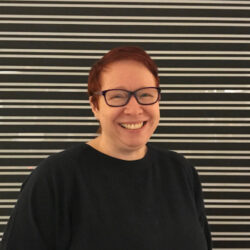 Who am I?
For over twenty years I worked in curatorial practice, spending most of that time at the crossroads of digital art, ethics and social change. I’ve always been drawn to the ways technology-driven art can help us see the world differently, to question the structures shaping our lives, uncover hidden inequalities, and open up conversations we might not otherwise have.
Why am I drawn to bioregioning?
I live and work in Tayside, and this place has been good to my family and me. This feels like my way of giving something back, helping to build community-owned, low-energy digital infrastructure that offers a real alternative to the extractive systems we’ve become dependent on. Finding that balance matters to me. I think it matters to all of us. I’m really glad to be part of this.
What’s on my docket in this role?
Alongside day-to-day administration and programming, I’m helping to co-develop a Community Digital Stewardship Framework for the Tayside Bioregion. At its heart, this framework identifies which digital tools we genuinely need, what are the environmental costs, and what better alternatives look like.
Nimaya Lemal, Storyteller
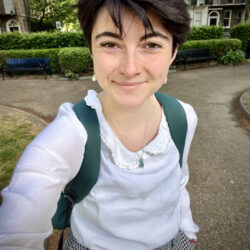
Who am I?
Nimaya Lemal (she/her), I am a PhD researcher at the University of St Andrews’ School of English. My thesis examines youth-led climate litigation materials, asking how youth plaintiffs articulate climate harm, futurity, and political belonging. I hold an MLitt in Environment, Culture, & Communication from the University of Glasgow, where I wrote my dissertation on ‘play’ as an ethic for environmental communicators. I have been published in The Modernist Review, the Oxford Review of Books, and English (OUP), and I’m a co-founder and editor of the literary ecology journal Ambient Receiver, and was recently the recipient of the Kirkpatrick Dobie Prize for Creative Writing. I am a member of the Critical Reimagining of Human Rights research centre.
Why am I drawn to bioregioning?
I believe that many of our current systemic problems — economic, consumptive and material, social and prejudicial— mistake the interconnected, inter-nested nature of health and wellbeing. The logic of many current systems assumes that some things must be excluded or take the brunt of the harm for benefits to be felt elsewhere. Other systems, like water systems, show us this is not so. Systemic harm anywhere negatively affects the whole. I am drawn to bioregionalism for many reasons, but in no small part because it does not negotiate with sacrificing places or people. A bioregional approach faces head-on the hard and necessary work of effective cooperation.
What’s on my docket in this role?
My role includes setting up healthy, consistent channels of storytelling and news about BT and bioregionalism broadly. This includes sharing three kinds of stories. The first is Bioregioning Tayside stories that keep the region informed about who we are and what we’re doing so that you hear about it and can get involved.
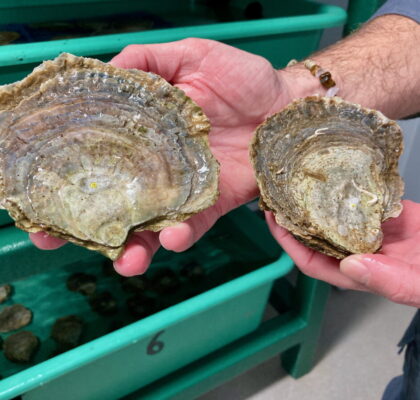
The second is Tayside-wide: finding stories of bioregional work that is underway or burgeoning in our region so that these projects get amplified, and partners can find each other. For instance, see this month’s piece on terrific work underway in the Tay in Native Oyster restoration — and its innovative science-backed business model for genuine ecological recovery.
Thirdly, I find bioregional designs and projects at work worldwide and bring those ideas to our context to see how we might learn from or even join that work. For instance, I recently connected with the Embassy of the North Sea, a group working on a more inclusive political role for the North Sea in European policy. After some conversations, the River Tay is now a part of their umbrella Confluence of European Water Bodies, which you can check out here.
This entry was posted in News