In a world defined by cascading global crises — climate instability, biodiversity loss, economic inequality, and cultural fragmentation — it can feel as though the systems sustaining life are fraying beyond repair. Yet within this web of interconnection lies a profound opportunity for renewal. At Bioregioning Tayside, we believe one promising path forward is the bioregional approach: organising human life around the ecological and cultural realities of place.
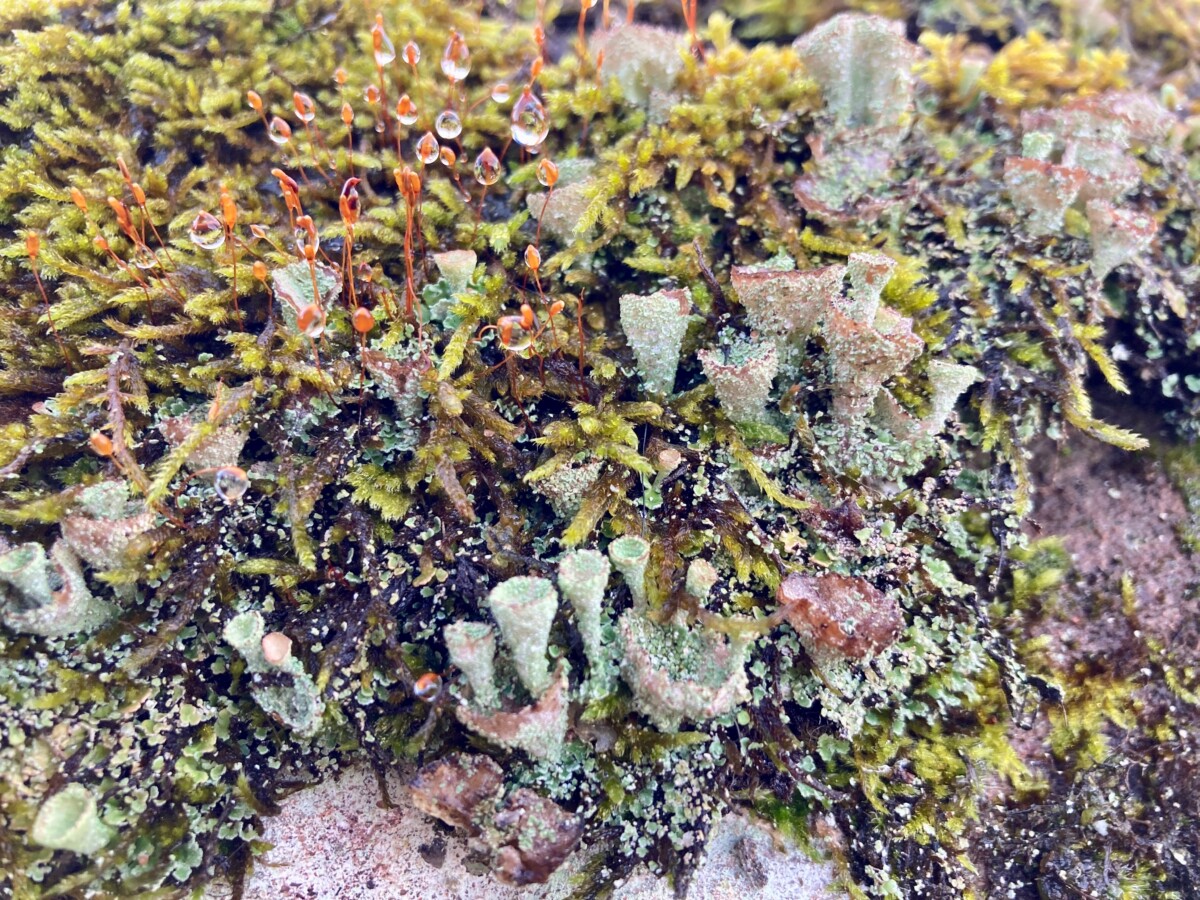 Lichens and mosses in the Den O’ Alyth, photo Clare Cooper
Re-rooting in Place
Bioregioning invites us to look at the world not as a grid of nations or markets, but as a mosaic of living watersheds, foodsheds, and ecosystems. By aligning governance, economy, and community life with the contours of the land, we begin to regenerate the very systems we’ve depleted.
Healing Climate and Ecology
Where globalised economies often extract and exhaust, bioregional frameworks restore and regenerate. When communities manage land and water within ecological boundaries — reforesting, restoring wetlands, protecting native species — they build climate resilience from the ground up. It’s adaptation by design, not crisis.
Securing Food and Water
By relocalising food systems and managing water as a shared commons, bioregioning reduces dependency on volatile global supply chains. Healthy soils, clean rivers, and thriving local producers become the real indicators of prosperity.
Reweaving Community
In an era of social fragmentation, reconnecting with place offers belonging. When people know their bioregion — its species, seasons, and stories — they rediscover shared meaning and mutual care. Cooperative economies and community-led governance grow from this rootedness.
 Young Scottish Country Dancers at a local Perthshire show, photo Clare Cooper
Rethinking the Economy
Bioregioning supports circular, regenerative economies that honour ecological limits. It’s a shift from extraction to reciprocity — where value circulates locally, and prosperity is measured by the health of people and ecosystems alike.
Rekindling Hope
Perhaps most importantly, bioregioning restores agency. It gives us a scale at which action feels possible, and hope becomes tangible. Reconnecting with place is not nostalgia; it’s the foundation of a liveable future.
From Global Risk to Living Network
What if, instead of a globalised system of extraction, we cultivated a global network of bioregions — each self-reliant yet interconnected, exchanging knowledge, culture, and solidarity? The renewal of life begins not in abstract systems, but in the soil beneath our feet and the communities who care for it.
Bioregioning – a ‘Hope Attractor’
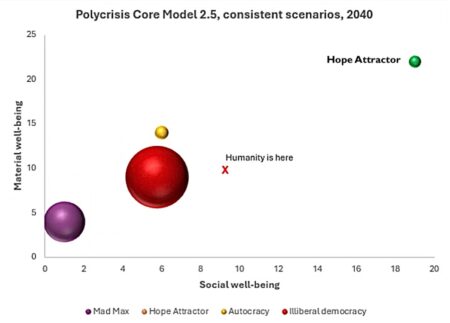
Graphic, Cascade Institute
With these thoughts in mind, we participated in the second Bioregional Briefing Room Session, convened by the Atlantic Isles Bioregional Finance & Governance Community of Practice of which Bioregioning Tayside is a member, where we spoke with Thomas Homer-Dixon and Shandell Houlden of the Cascade Institute about what their modelling of the polycrisis reveals for the future of bioregional work. You can read the synopsis of our conversation with Tad and Shandell here.
This conversation followed our earlier exchange with Taiwanese Ambassador at Large Audrey Tang, deepening the Briefing Room’s purpose: to connect bioregional practice with the global systems dynamics and governance shifts that define the terrain we are working within.
 Alyth’s New Year Beacon, photo Clare Cooper